Influencer Marketing Funnel: Awareness → Sales
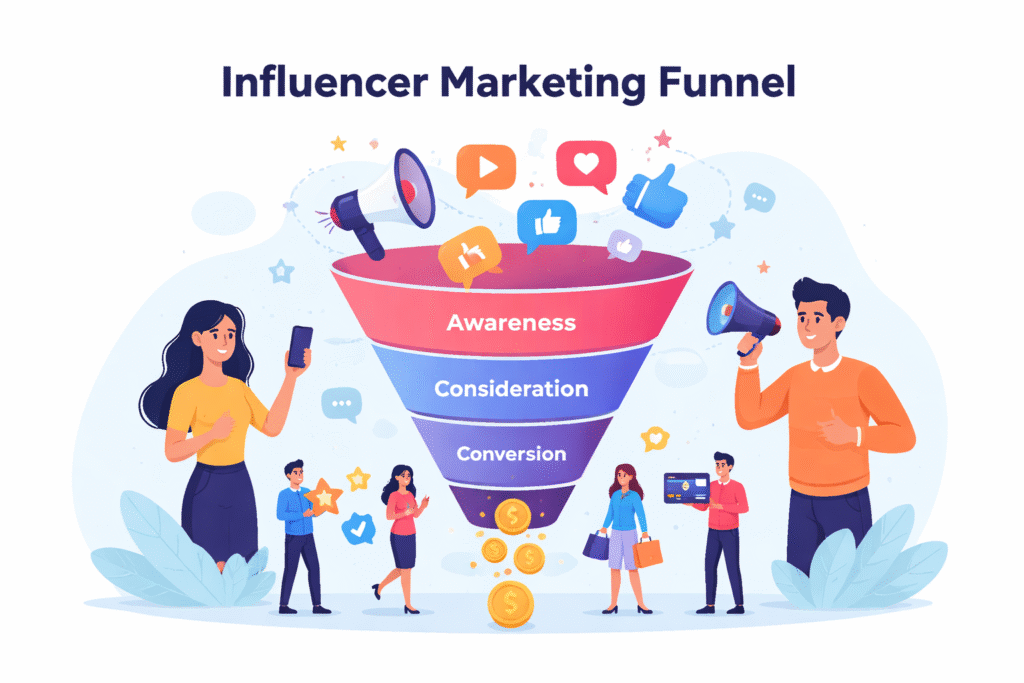
In 2026, posting with influencers and hoping sales will follow is no longer a real strategy. Brands that are growing consistently understand that influencer marketing works best when it functions as a complete funnel. Instead of focusing on isolated posts or short-term visibility, successful brands guide people through a clear journey—from discovering the brand for the first time, to building trust, making a purchase, and eventually becoming loyal advocates. Influencer marketing today is less about one viral moment and more about creating a system that delivers measurable business results.
Stage 1: Awareness – Getting Your Brand Discovered
The first stage of the influencer funnel is awareness, where the goal is to introduce your brand to new audiences and create recall. At this point, the objective is not to sell but to be noticed. Brands typically work with micro or macro influencers who have broad reach within the target demographic. Lifestyle, entertainment, and general-interest creators perform especially well because their content feels natural in everyday consumption. Formats such as trending reels, day-in-the-life videos, behind-the-scenes stories, and entertaining brand integrations help audiences remember the brand without feeling pressured to buy. A sustainable fashion brand from Bengaluru successfully applied this approach through a storytelling-driven “slow fashion challenge” with lifestyle creators, resulting in over five lakh profile visits in just two weeks. Success at this stage is measured through reach, impressions, profile visits, follower growth, and content shares rather than direct sales.
Stage 2: Consideration – Building Trust and Relevance
Once audiences are aware of a brand, the next stage focuses on trust. This is where people begin asking whether the product or service fits their needs. Niche micro influencers, expert creators, and credible reviewers are most effective here because their audiences expect depth and honesty. Content such as detailed reviews, product demonstrations, educational posts, ingredient or feature breakdowns, and comparison content helps potential customers move from interest to confidence. For example, a skincare brand partnered with dermatology creators to explain skin concerns and ingredient science, positioning the brand as a credible solution rather than just another option on the shelf. During this stage, brands track engagement rates, website traffic, time spent on pages, saved content, and direct inquiries to evaluate growing interest.
Stage 3: Conversion – Turning Interest into Sales
The conversion stage is where trust turns into action. Here, authenticity matters more than reach, which is why nano influencers, affiliate creators, and real customers often outperform larger influencers. Their recommendations feel personal and relatable, making audiences more comfortable with purchasing. Content formats such as unboxing videos, first-use impressions, before-and-after results, limited-time offers, and clear calls to action supported by unique discount codes perform especially well. An electronics brand demonstrated this during a festive sale by working with thirty nano influencers, each sharing a personalised discount code, achieving a 6.8 percent conversion rate—higher than its paid advertising campaigns. Key metrics at this stage include click-through rates, code usage, direct sales, cost per acquisition, and overall conversion rates.
Stage 4: Loyalty – Turning Customers into Advocates
The final stage of the funnel focuses on long-term value rather than one-time purchases. Brands that win in 2026 invest in nurturing existing customers and turning them into loyal advocates. Influencers at this stage are often genuine users, brand ambassadors, or active community members who already love the product. Content revolves around customer success stories, user-generated content campaigns, referral programs, exclusive product launches, and interactive engagement such as Q&A sessions or polls. A Mumbai-based food delivery app successfully launched a community-driven “Brand Buddy” program that rewarded satisfied customers with early access and referral benefits, leading to a forty percent increase in customer lifetime value.
The Bigger Picture: Turning Influence into Revenue
When all four stages work together, influencer marketing becomes a scalable growth engine rather than a gamble. Many Indian brands now distribute their budgets across the funnel instead of spending everything on awareness alone. One personal care brand combined macro influencers for visibility, beauty creators for education, nano influencers for sales-driven content, and customers as long-term ambassadors. This approach resulted in significantly lower acquisition costs and a strong increase in revenue. Common mistakes brands still make include expecting instant sales from awareness campaigns, using the same content at every stage, ignoring post-purchase engagement, and failing to track which influencers actually drive business outcomes.
Final Thought
Influencer marketing today is not about chasing virality. It is about building a structured, funnel-based journey that moves people from discovery to trust, from trust to purchase, and from purchase to advocacy. Brands that clearly define this journey, choose the right influencers for each stage, and measure meaningful outcomes are the ones turning influencer marketing into a reliable and profitable channel in 2026.